
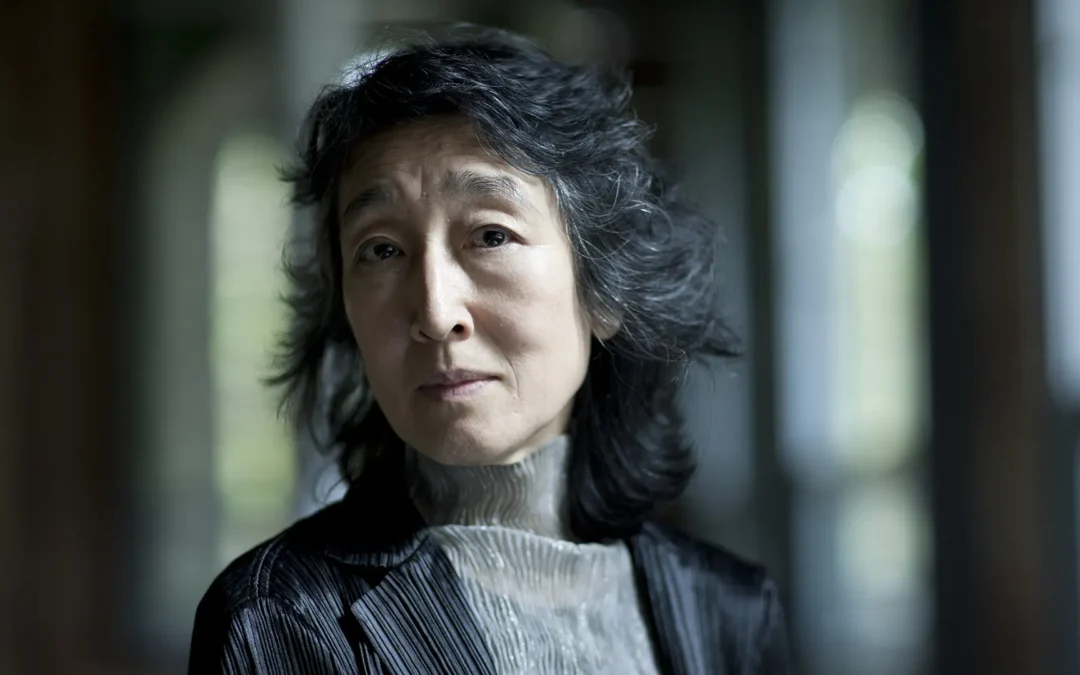
On 12 and 14 October, acclaimed pianist Mitsuko Uchida delivered two unforgettable recitals at London’s Wigmore Hall, performing Beethoven’s final three Piano Sonatas. Known for her unmatched sensitivity, technical command, and deep musical insight, Uchida brought a compelling intimacy and clarity to the late sonatas, reaffirming her place among the leading interpreters of his music today. Praise from critics and audiences alike highlight the exceptional artistry on display across both evenings.
In her 5* review, Erica Jeal from The Guardian wrote:
“Beethoven’s last three piano sonatas are a gift for a pianist as adept at balancing the playful and the profound as Mitsuko Uchida…Perhaps it’s in the way that each sonata seems to pick up on and amplify the conflicts, beauties and struggles of the one before. Op 109 came to its close above a low rumble that Uchida made sound like an earthquake – Beethoven must have thought of sound as something to be felt as well as heard. When similar deep grumbles recurred in the first movement of Op 110 – gentler and unquiet this time, contrasting with tender chords above – they felt like a recollection. The forthright little fugue variation in Op 109 found its fully grown counterpart in the huge culmination of Op 110, and the peace that was so hard won at the end of Op 111 felt like a resolution of a whole evening’s music, not just one sonata…At the very end, she held us in silence – then gave a little start and grinned as if she’d been having a game, seeing how long she could keep us enthralled. Naturally, she had won.”
Michael Church wrote another 5* review in The i Paper:
“She played the first sonata with spinning grace, as though surveying the emotional landscape she planned to explore. The second took her deep into that landscape, encountering everything from off-the-wall comedy to seemingly inconsolable grief, before emerging into the sunlight with a fugue first played upside down, and then right side up. In the course of 90 minutes, Uchida ran the whole gamut of moods and effects, sometimes swooningly lyrical, and at other times planning her assault on the keyboard like a panther stalking its prey. The third sonata was breathtaking, opening with majestically rolling thunder, followed by an ecstatic meditation which eventually led us into heaven on the wings of an airy framework of trills. It’s generally agreed that these three works constitute the most profound keyboard music ever written, and this great pianist’s take on them was unforgettable.”
Vishnu Bachani from Bachtrack wrote:
“The combination of trills, arpeggios and both slow and fast melodic lines in the final variation are a truly unique moment in the piano literature, showcasing Beethoven’s revolutionary innovation. Uchida brought a lifetime’s worth of study to her performance; after having ascended to the highest of heights, the descent back down to a serene pianissimo finish was a befitting close to the sonata and to the evening.”
Daniel Lewis from The Times wrote:
“Giving particular prominence to the lower register of the piano, she leant into chromaticism and leading notes that almost seemed reluctant to resolve. Elsewhere she pressed on downwards, turning dissonances like sores…But to my mind the heart of her performance was the second of these three sisters, No 31. Again, there was a sharp lucidity to the soaring melody of the first movement. In the second the abrupt shifts in tempo and dynamics could be startling even when you knew what was coming.”
Following her acclaimed performances at Wigmore Hall, Uchida will bring her all-Beethoven programme to Tokyo’s Suntory Hall on 28 and 30 October, as she continues to share her interpretation of the three great monuments of 19th-century music on the international stage.
Photo: Justin Pumfrey